17 Hrs
المصدر:
عربية – DW
عربية – DW
جاهز للتشغيل
جاهز للتشغيل
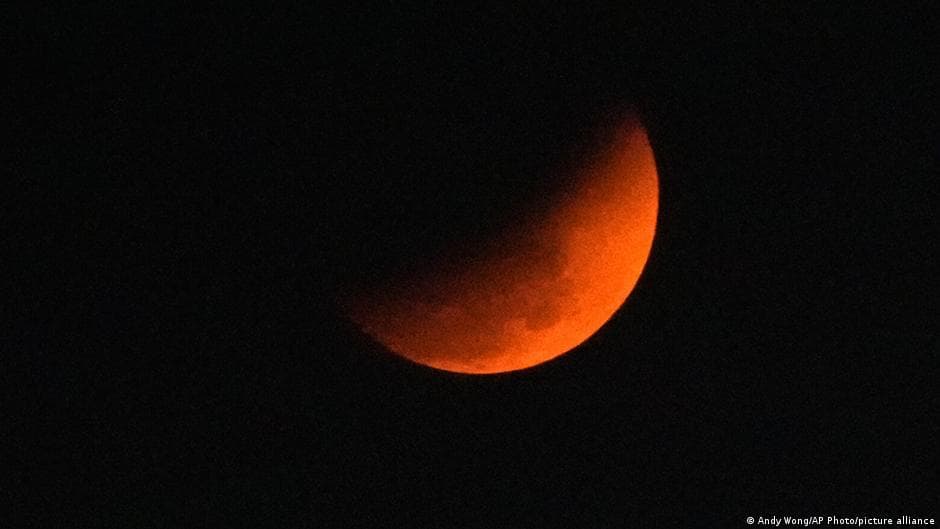
On Friday morning, August 28, Egypt will experience a partial lunar eclipse lasting approximately five hours. This event coincides with the full moon in the month of Rabiʿ al-Awwal 1448 AH. During its peak, Earth's shadow will cover about 93% of the Moon's disk. The eclipse can be observed with the naked eye, although the initial phase, the "penumbral eclipse," is not visible without aid. The eclipse begins at 4:24 a.m., reaches its maximum at 6:29 a.m., and will be completely over by 10:02 a.m. This eclipse is significant for astronomers for observation and research purposes. It is also used to verify the accuracy of astronomical calculations related to the Islamic lunar calendar and moon phases. It is the last visible eclipse in Egypt for this year before sunrise, with a total solar eclipse expected in 2027. Generally, looking at a lunar eclipse with the naked eye does not cause harm, as the Moon reflects sunlight and does not emit its own light.
تنويه: هذا ملخص تم إنشاؤه بواسطة الذكاء الاصطناعي





comments.heading