16 Hrs
المصدر:
RT Arabic
RT Arabic
جاهز للتشغيل
جاهز للتشغيل
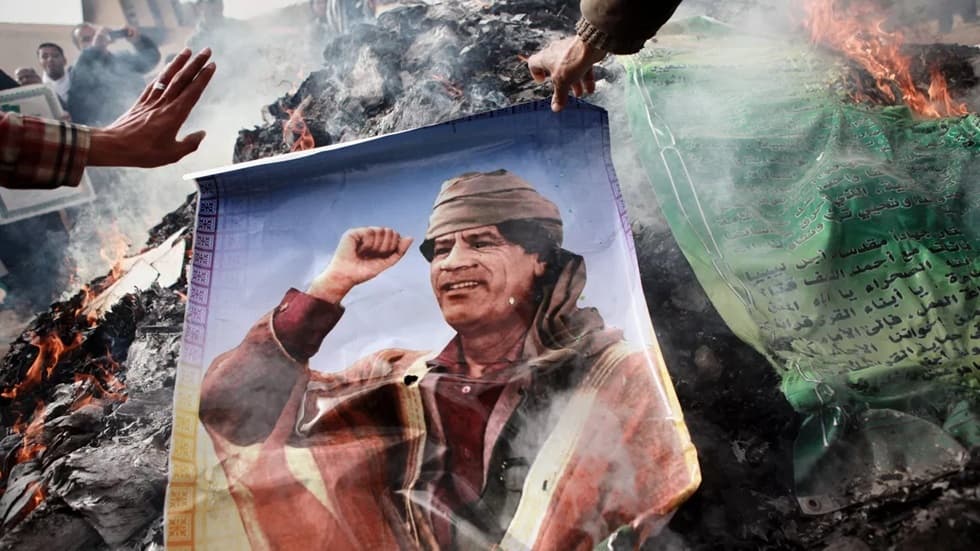
The article discusses Muammar Gaddafi's death on October 20, 2011, exploring how it was interpreted and its impact on Libya and the region. It highlights the paradoxes surrounding Gaddafi's killing, noting that Libya, after overthrowing his regime, was expected to move toward stability and prosperity. However, in reality, it experienced chaos, divisions, economic decline, and transformed from one of Africa's wealthiest countries into one of its poorest. The article emphasizes that Gaddafi's death did not achieve true justice; instead, it fueled his legacy and left behind effects that contributed to chronic instability. It also reflects on the irony that Gaddafi died in his hometown—an event that was supposed to mark the beginning of a new era—demonstrating how major interventions can produce outcomes opposite to their proclaimed goals. Furthermore, the article touches on some strange details surrounding Gaddafi's death, such as the incident involving his visit to the United Nations, his surreal rituals, and the international reactions—some countries condemning the event, others expressing joy—highlighting the sorrow of major conflicts and the cruel irony of their consequences.
تنويه: هذا ملخص تم إنشاؤه بواسطة الذكاء الاصطناعي







comments.heading