1 Day
Source:
بوابة أخبار اليوم
بوابة أخبار اليوم
Ready to play
Ready to play
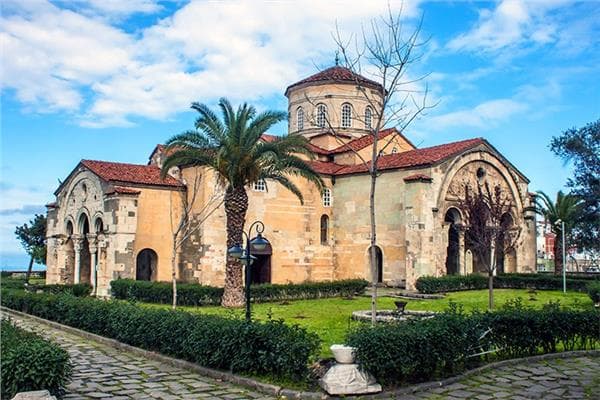
The article discusses the author's journey of discovering nine buildings named "Hagia Sophia" in Turkey, which means "Holy Wisdom" or "Divinity." It begins in Istanbul, where the Hagia Sophia Mosque in the Fener district is considered one of the greatest historical landmarks. Built between 532 and 537 AD by Emperor Justinian I as the Hagia Sophia Cathedral of Constantinople, it remained the world's largest domed covered structure for a thousand years until surpassed by Seville Cathedral. After the conquest of Istanbul in 1453, Sultan Mehmed the Conqueror converted the building into a mosque, adding minarets after the Byzantine mosaics had been covered with plaster. In 1935, Mustafa Kemal Atatürk ordered its conversion into a museum, a status it maintained for 86 years until the Turkish Supreme Court overturned the decision in July 2020, and it was reopened as a mosque with support from President Erdoğan. The government collaborated with religious authorities to preserve its status as a mosque, allowing non-Muslim visitors to access only the upper balcony. In İznik, the author visited the small Hagia Sophia, built in the 6th century atop an earlier church, which holds additional historical significance as the site of the Seventh Ecumenical Council. The article notes that there are seven other buildings bearing the name "Hagia Sophia" scattered across Istanbul, Edirne, Kırklareli, Trabzon, and Gümüşhane, which remain future destinations for visitors. It emphasizes the architectural and religious importance of these structures and their historical roles in transforming from cathedrals to mosques and museums over the centuries.
Notice: This Is an AI-Generated Summary




_1777352244987_250242181.png&w=48&q=75)

Comments (0)