5 Hrs
Source:
بوابة أخبار اليوم
بوابة أخبار اليوم
Ready to play
Ready to play
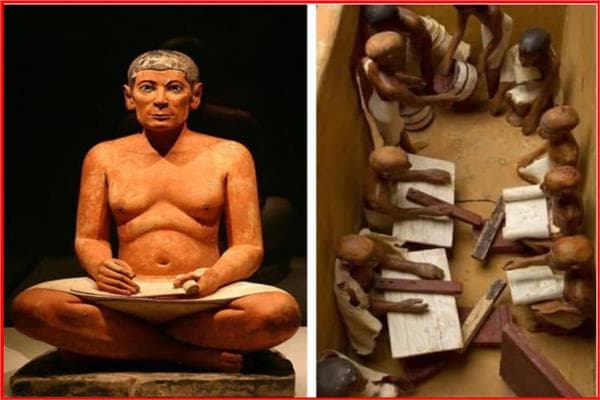
The education system in ancient Egypt was distinguished by offering a comprehensive curriculum aimed at developing individuals morally, academically, and physically—a model that preceded other civilizations. Education began in early childhood, between the ages of four and ten, where children learned reading, writing, and arithmetic, while also instilling ethical values and physical activity. Subsequently, from age ten to fifteen, students specialized in writing, management, and administrative sciences. Outstanding students received training in official institutions to become scribes and officials, while children of artisans and farmers learned within their families. After the age of fifteen, students moved to the "House of Life," which is considered the oldest university in history. There, they studied specialized fields such as medicine, engineering, astronomy, and arts, with a particular emphasis on medicine derived from the expertise of embalming. Many archaeological sites have revealed schools and advanced educational layers, and the rights of women in ancient Egypt to education and access to high positions—such as female doctors and judges—affirm the importance of this educational system. Overall, the aim of education was to prepare a well-rounded person equipped with knowledge, morals, and skills, contributing to the building of an Egyptian civilization with scientific and architectural achievements that continue to inspire the world.
Notice: This Is an AI-Generated Summary








Comments (0)