1 Day
Source:
بوابة أخبار اليوم
بوابة أخبار اليوم
Ready to play
Ready to play
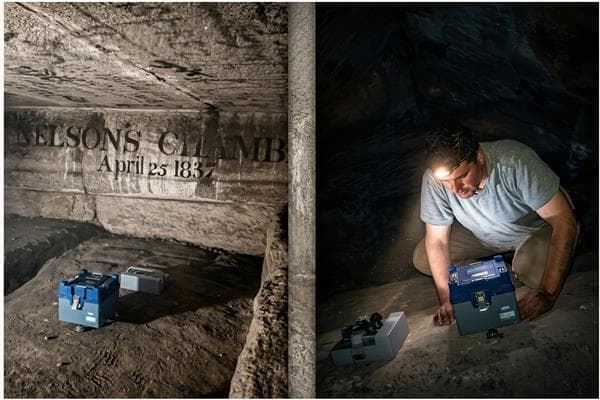
A recent study revealed that the continued resistance of Khufu's Great Pyramid to earthquakes, which has endured for over 4,600 years, is due to the disparity between its natural frequencies and those of the surrounding soil. This mismatch prevents the occurrence of the catastrophic "resonance" phenomenon that causes structures to collapse during quakes. Analyses showed that the pyramid's body vibrates at a frequency ranging between 2.0 and 2.6 Hz, while the soil registers around 0.6 Hz, explaining its ability to withstand strong tremors. Additionally, internal chambers designed to reduce pressure, along with the pyramid's robust foundations, effectively contribute to minimizing seismic response. The study confirms that the pyramid's architecture relies on extensive experience and empirical accumulation. These findings could be utilized to develop safety standards for modern buildings and apply similar techniques to other pyramids to assess their earthquake resistance.
Notice: This Is an AI-Generated Summary






Comments (0)