10 Hrs
Source:
المصري اليوم









Source: المصري اليوم
10 Hrsالمصري اليوم
Source: المصري اليوم
10 HrsReady to play
Ready to play
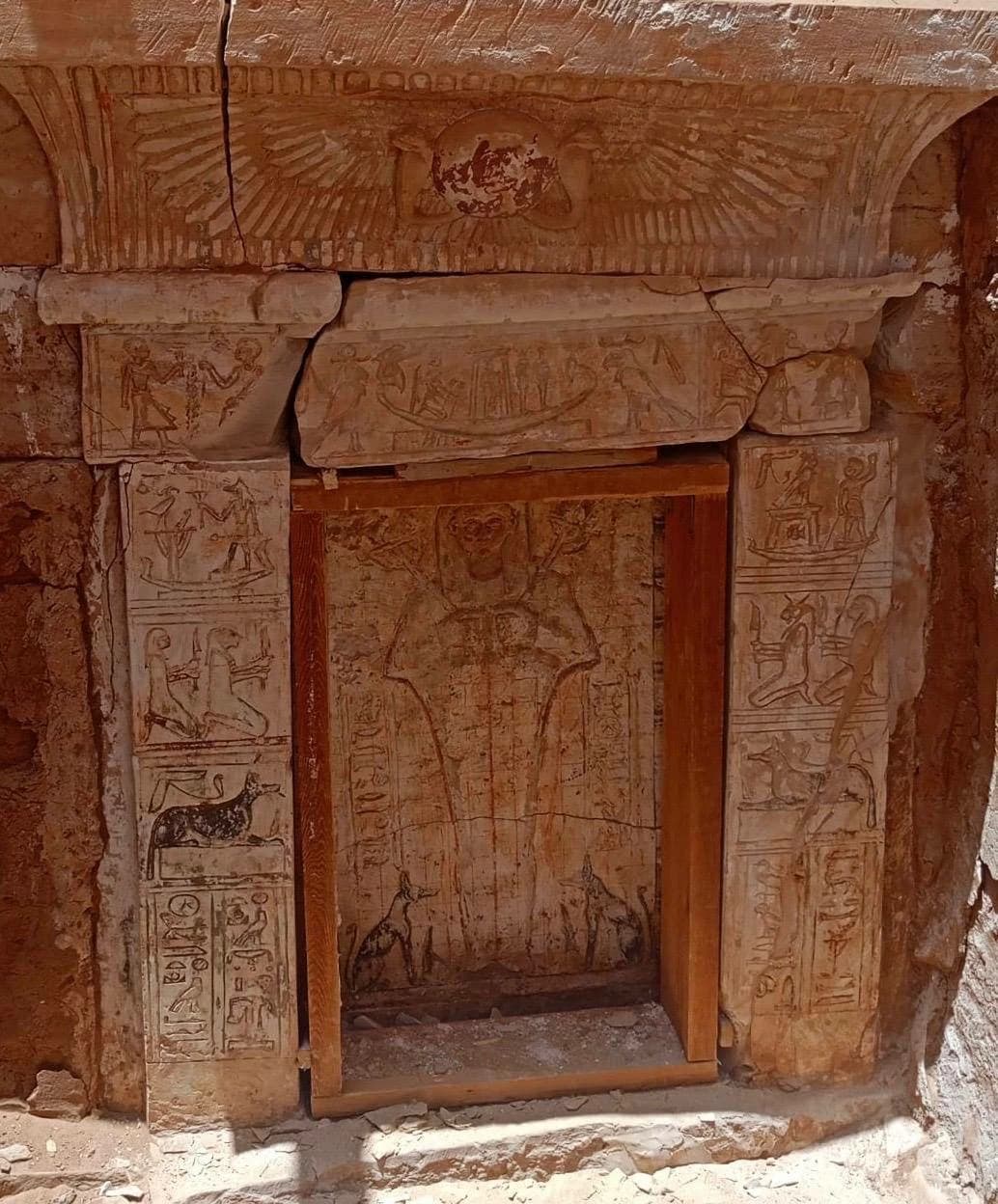
An Egyptian archaeological expedition has uncovered a pyramid-shaped tomb made of mud bricks dating back to the Roman era in the Bair al-Shaghala area of the New Valley Governorate. It was designated for the burial of a man and his wife. The tomb features a design that combines elements of ancient Egyptian style with Greek and Roman influences. Inside, there are funerary inscriptions, including a lament in ancient Greek from the late 3rd to early 4th century AD, and a distinctive stone relief that documents the cultural life of that period. Additionally, a bronze coin bearing the name of the Roman Emperor Constantine was found, along with pottery tools and rare architectural elements such as an entrance made from sandstone inscribed with spells, symbols, and funerary motifs. Architectural features also reflect a unique style that blends Egyptian, Greek, and Roman elements. These findings indicate that the area served as a center for burial and funerary rituals, with possible reuse of the tomb in later periods. This discovery provides valuable insights into the cultural and religious life of the people from that era.
Notice: This Is an AI-Generated Summary
Comments (0)