



1 Day
خبرني
Source:

خبرني

2026-09-26T00:00:00.000Z

Most Read

28% of occupation police resign since Ben Gvir's appointment

جو24جو24جو24
21 Hrs2026-09-26T07:41:10.000Z
28% of occupation police resign since Ben Gvir's appointment

Pharmacists decline private company talks

جو24جو24جو24
21 Hrs2026-09-26T07:27:15.000Z
Pharmacists decline private company talks

Ex-Algerian envoy blames UAE for Mauritania rapprochement

عربي21عربي21عربي21
21 Hrs2026-09-26T07:11:54.000Z
Ex-Algerian envoy blames UAE for Mauritania rapprochement

White House Dinner Menu: Trump and Shi

وكالة عمون الاخباريةوكالة عمون الاخباريةوكالة عمون الاخبارية
22 Hrs2026-09-26T06:07:37.000Z
White House Dinner Menu: Trump and Shi

Moderate weather persists until Monday

الحقيقة الدوليةالحقيقة الدوليةالحقيقة الدولية
23 Hrs2026-09-26T04:59:00.000Z
Moderate weather persists until Monday
خبرني

Source: خبرني

1 Day
Jarayid.com
Follow Us
Jarayid.com

Smart Reader

Ready to play

Smart Reader

Ready to play

Alzheimer's blood vessel damage mechanism
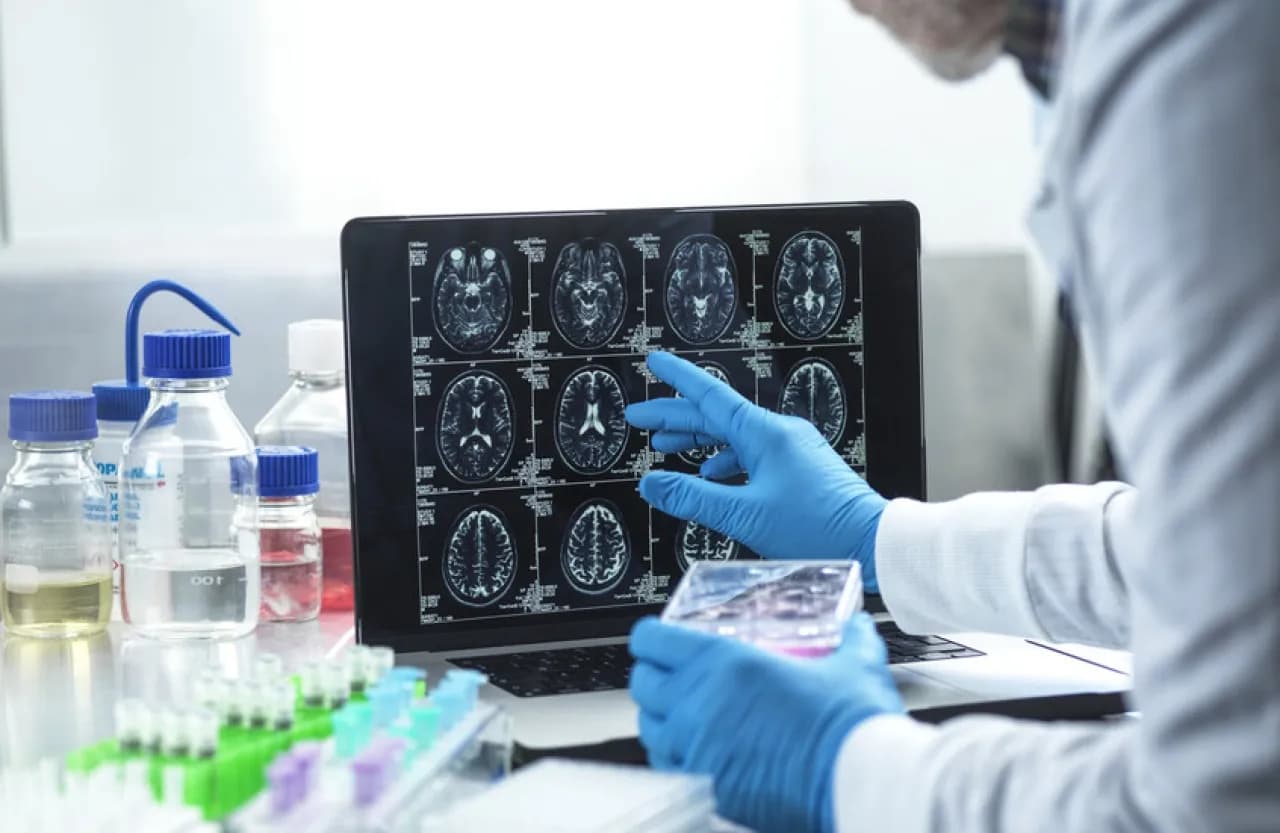
Alzheimer's blood vessel damage mechanism

A recent study from Mount Sinai has revealed that the genetic variant APOE4, the strongest hereditary risk factor for Alzheimer’s disease, actively causes damage to brain blood vessels and promotes the accumulation of harmful proteins, rather than being merely a consequence of the disease as previously believed. The research showed that APOE4 transforms supportive cells in the vasculature—such as surrounding cells and small vessels—into scar-forming cells, which enhances fibrosis and amyloid buildup, affecting blood flow and accelerating neurodegeneration. These effects can be reversibly treated by blocking the TGF-β pathway, which reduces fibrosis and restores blood vessel function—a strategy demonstrated successfully in aged mice carrying APOE4. Additionally, a second study found that APOE4 causes cholesterol to accumulate in star-shaped brain cells (astrocytes), disrupting their waste clearance system and leading to the buildup of the harmful protein alpha-synuclein, which forms deposits that damage brain cells. These findings open new avenues for developing treatments targeting cholesterol metabolism and improving lysosomal function, utilizing three-dimensional human brain tissue derived from stem cells. This approach enhances the potential for personalized therapies and faster testing of new interventions.

Size: 120%Text Size

Notice: This Is an AI-Generated Summary

Display The Full Article
Share the News

Comments (0)

JARAYID.COM

The Jordan News page on Jarayid.com provides ongoing coverage of major news and developments across the Hashemite Kingdom of Jordan, from the capital Amman to Irbid, Zarqa, Aqaba, and other governorates. Coverage includes politics, economy, business, sports, education, tourism, society, and local events. We summarize important Jordanian news from trusted sources in a clear and concise format, helping readers quickly follow the key stories and developments shaping Jordan each day.

Download App Free!

Scan the QR Code

QR code

Follow Us

OUR PICKS

Tech thumbnail
Tech

Android feature preserves deleted messages

Sports thumbnail
Sports

Six adjustments in Saudi squad versus Oman

World News thumbnail
World News

Riyadh urges global help on navigation stability

Categories

  • Podcast08
  • America337
  • Europe169
  • Health135
  • Shows75
  • Sports205
  • Tech264
  • World News340
  • Celebrity News108
  • Economy98
  • Terms & Conditions|
  • Privacy Policy|
  • About Us|
  • Contact Us|
  • Advertise With Us|
  • FAQ|
  • Archive

© 2026 Jarayid.com