








Reasons Hot Water Freezes Faster
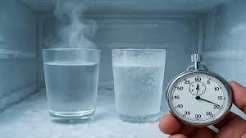
The article explains the phenomenon of the "Mpemba Effect," which causes hot water to freeze before cold water under certain specific conditions, contrary to what physics laws would predict. The phenomenon is attributed to multiple factors, including the rapid evaporation of hot water, strong convection currents, the contact of the hot container with the frozen surface that melts the thin layer of ice, thereby speeding up the cooling process, as well as supercooling, which can keep water in a liquid state longer than expected. Although cold water typically freezes first, certain conditions can make hot water freeze faster. This depends on many factors such as the amount of water, the shape of the container, whether there is a lid, and air movement. Overall, hot water can sometimes freeze faster than cold water in specific cases, but not always. Explaining this phenomenon requires an understanding of how multiple physical factors interact.
Notice: This Is an AI-Generated Summary
Comments (0)