24 Hrs
Source:
شبكة قدس الإخبارية
شبكة قدس الإخبارية
Ready to play
Ready to play
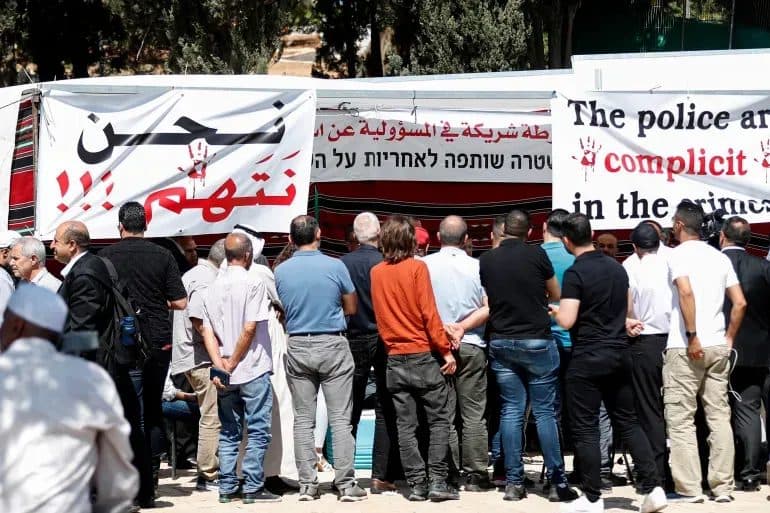
The article examined the impact of the Second Palestinian Intifada (Al-Quds and Al-Aqsa Intifada in 2000) on the Arab community within the Palestinian interior, illustrating how escalating violence and crime were used as tools to weaken the capacity for national mobilization. It showed that the Israeli establishment, after the Intifada, realized that weakening the Palestinian society inside could be achieved through intensifying its internal crises—particularly the spread of organized crime and weapons—thereby sowing divisions and disrupting social cohesion. The article emphasized that economic and social conditions—especially poverty, marginalization, and lack of opportunities—contributed to the rise of crime, which expanded to include murder, theft, and shooting, with weapons becoming a central element in escalating conflicts. It also highlighted the importance of confronting crime through a comprehensive economic and social plan that supports development projects, creates job opportunities, raises community awareness, and supports the roles of families, schools, and religious institutions in cultivating an awareness that fights revenge culture and the proliferation of weapons. Furthermore, the article pointed out that resisting this phenomenon requires ongoing efforts from both the community and institutions to build societal resilience and reduce the overlap between crime and economic or social causes. It underscored the importance of fostering a culture of reconciliation and consensus, and minimizing the risk of polarization.
Notice: This Is an AI-Generated Summary








Comments (0)