_1777294237270_124456903.png&w=64&q=75)




Color codes sort waste in healthcare
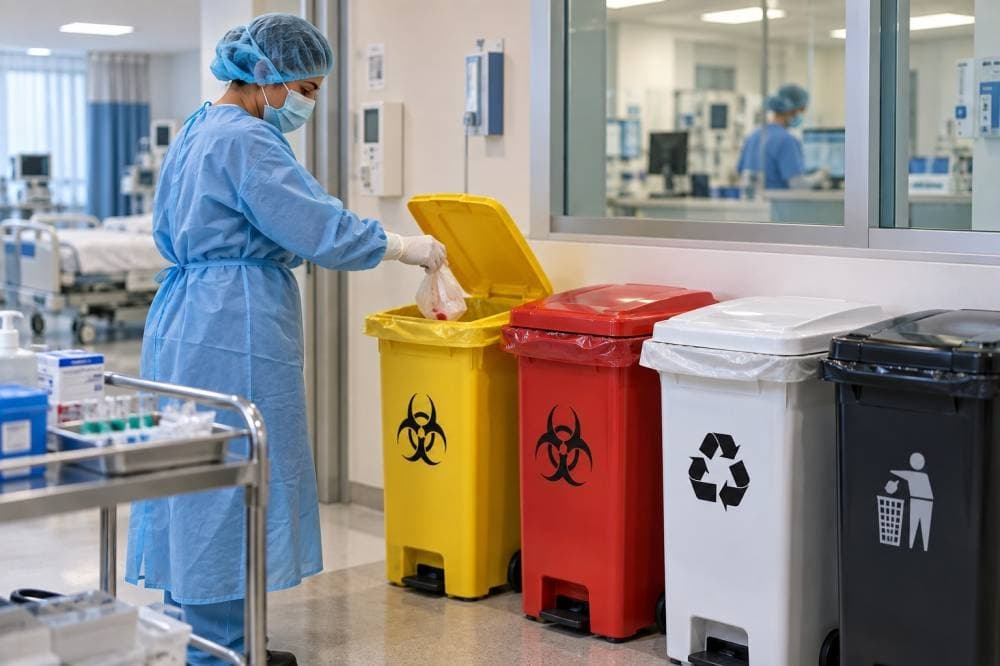
The article focuses on the organization and regulation of waste management in healthcare facilities. It describes an integrated system that begins with waste generation and includes classification, separation, packaging, transportation, and treatment, all aimed at protecting workers, the environment, and public health. Waste is divided into two main categories: non-hazardous (representing 85% of waste and similar in nature to municipal waste) and hazardous, which includes infectious waste, tissues and organs, sharp objects, pharmaceutical waste, chemical waste, radioactive waste, and others. Emphasis is placed on the immediate and proper separation at the source, using designated containers for each type, and maintaining records of all procedures and incidents related to waste management. Transportation, incineration, and treatment processes must follow specific procedures to ensure safety. Strict laws are in place to prevent mixing hazardous waste with non-hazardous waste and to regulate storage, transportation, and final disposal in a safe and effective manner.
Notice: This Is an AI-Generated Summary
Comments (0)