





Ancient Mexican cave treasure
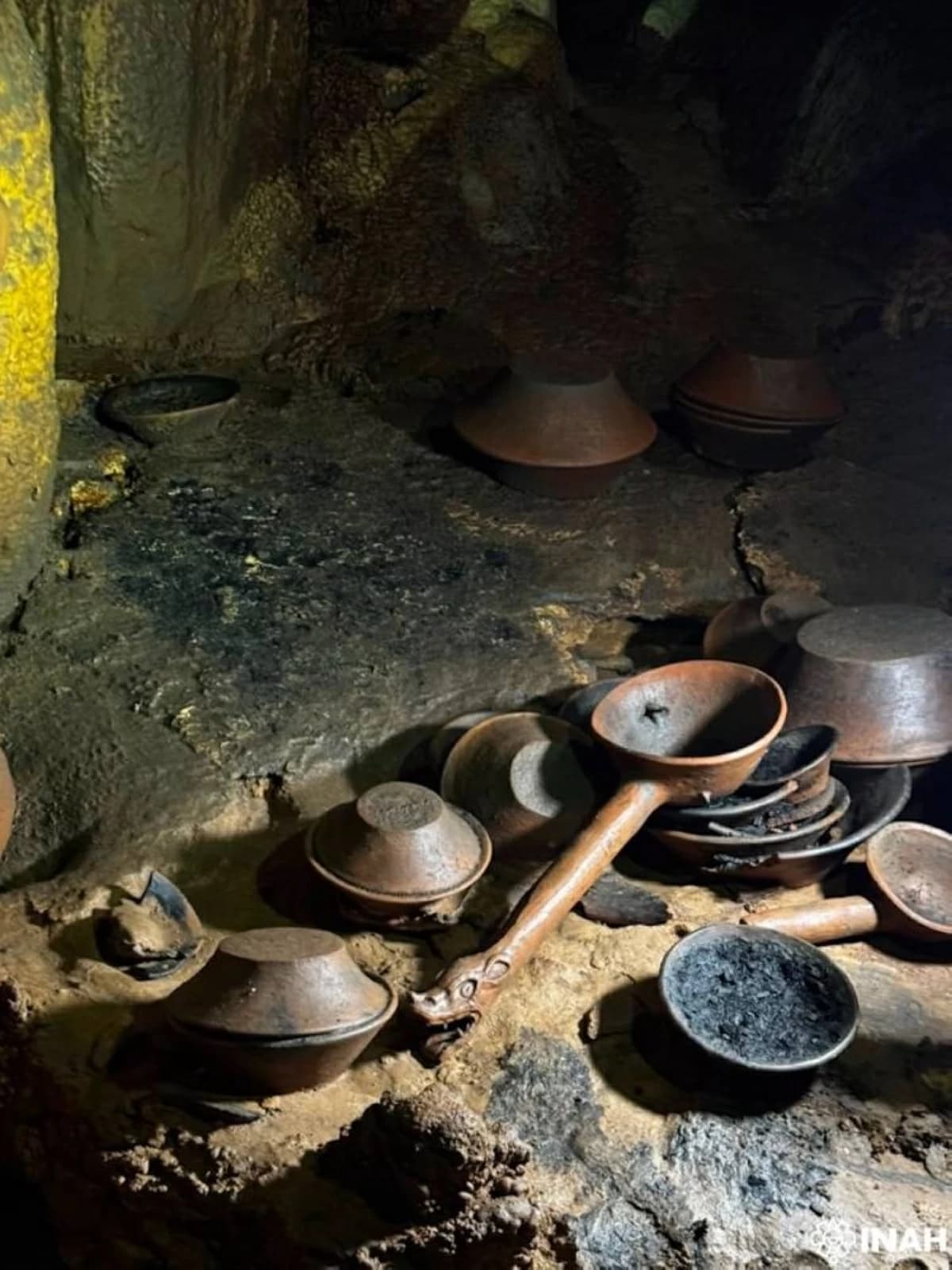
Researchers from the National Institute of Anthropology and History in Mexico have discovered the "Mundo Zok" cave in the municipality of Cintalapa, Chiapas State, in southern Mexico. The cave contains 179 archaeological artifacts dating from the Classic period between 600 and 900 CE. Located approximately 100 meters above ground level and difficult to access due to its rugged terrain, the cave has been well-preserved from looting over the centuries. The findings include censers, jars, and ceramic vessels decorated with symbols such as the American jaguar, an owl, and the serpent, which were used in religious rituals related to fertility and rain—indicating that the site was not used for habitation. Among the most notable pieces is a censers with a cosmic symbol and a handle shaped like a serpent, along with sketches depicting the beliefs of the Zapotec people. Currently, the site is being studied using scanning and 3D imaging technologies to document its religious and cultural significance.
Notice: This Is an AI-Generated Summary
Comments (0)