






New Findings Redefine Egypt's Horus Road
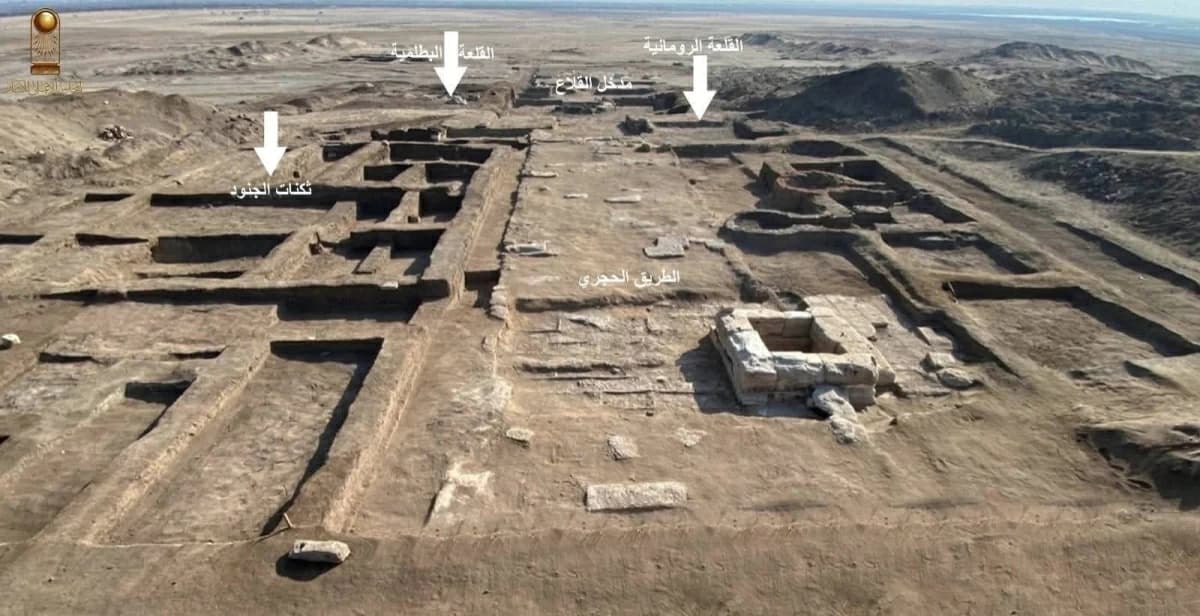
Archaeological excavations at Tel Abu Saifi in Qantara East city, Ismailia Governorate, Egypt, have revealed new details about the ancient Horus War Road, emphasizing its strategic role in safeguarding Egypt's eastern borders throughout history. The findings showed a massive mudbrick wall, towers, and paved stone roads from the Ptolemaic and Roman eras. Additionally, inscriptions bearing the titles of Ramses II and texts referring to the restoration of Horus statues were uncovered. The expedition also discovered artifacts with administrative and military significance, including parts of royal statues and inscriptions indicating that the site experienced multiple phases of development—from a religious temple during the Pharaonic period, to military barracks in the third century AD, and later a lime production site during the Roman period. These results highlight that the location was a vital strategic and cultural center, reflecting the importance of the Horus Road in border defense and the various historical events of ancient Egypt.
Notice: This Is an AI-Generated Summary
Comments (0)