






Cat Nebula Eye Observed Near Abu Dhabi
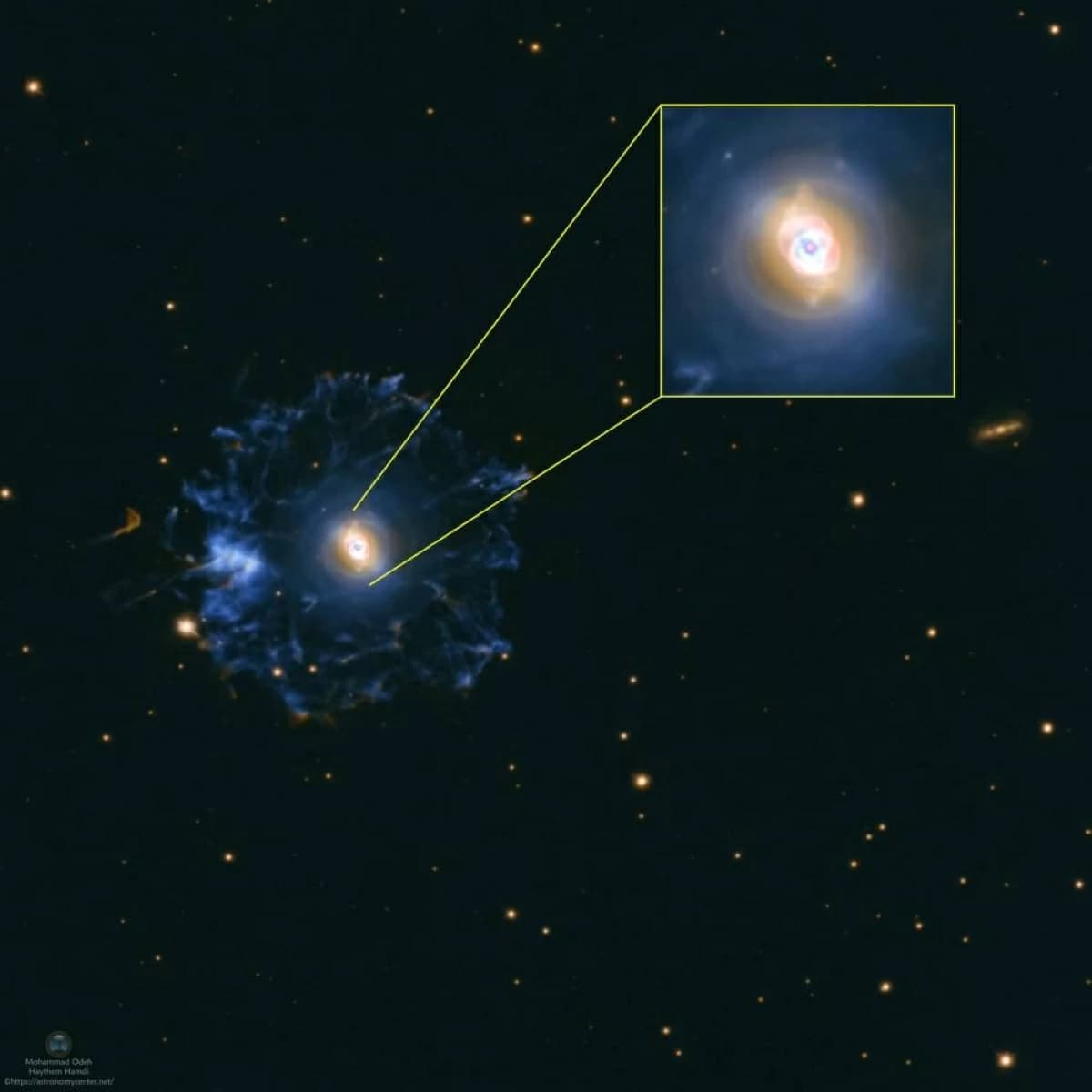
The Khemist Observatory in Abu Dhabi, operated by the International Astronomical Center, successfully captured images of the "Eye of the Cat" Nebula (NGC 6543), located about 3,000 light-years from Earth. This nebula is among the most famous and intricate planetary nebulae. The image reveals two distinct structures: an inner, highly luminous region resembling the eye of the cat, and a broader, irregular outer shell representing an earlier stage in the star's lifecycle. The nebula consists of gases expelled from the death of a star similar to the Sun, passing through phases of expansion and mass loss. Observations indicate that the outer envelope was ejected before the formation of the central structure. It contains multiple rings and gaseous layers, with velocities reaching up to 6 million kilometers per hour. This model reflects an ongoing evolution in stellar life cycles and serves as a future example of what may happen to the Sun after billions of years, when it reaches the end of its life, sheds its outer layers, and leaves behind its core as a white dwarf.
Notice: This Is an AI-Generated Summary
Comments (0)