





Scientists turn plastic waste into fuel
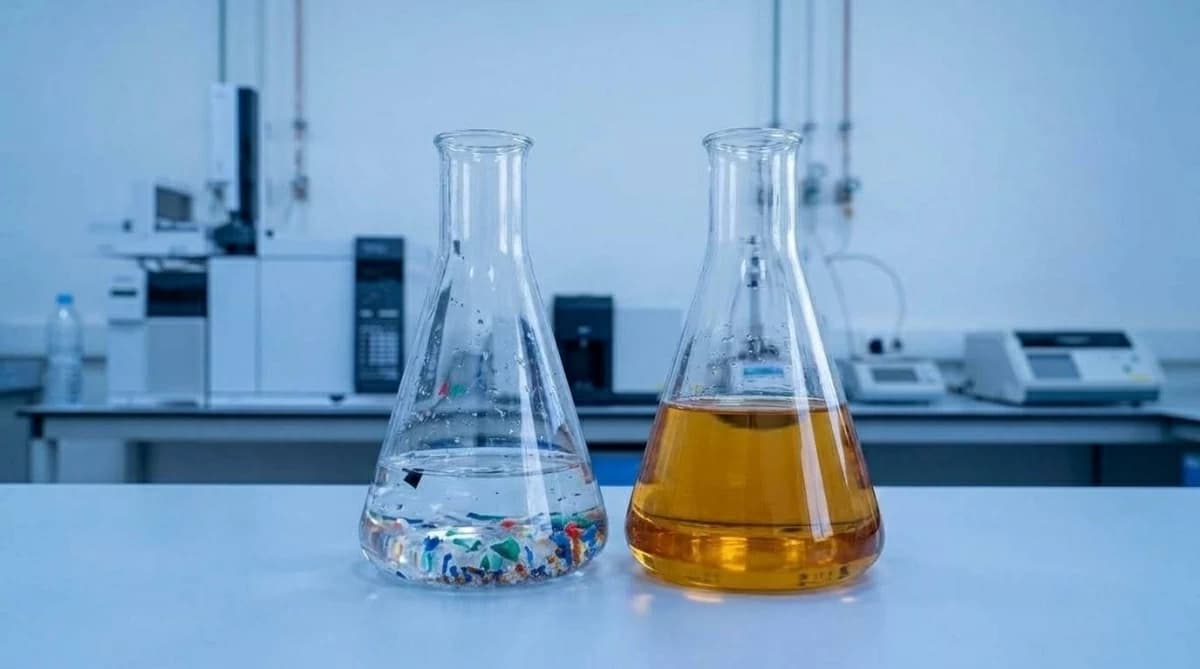
Researchers at the National Laboratory of Energy, part of the U.S. Department of Energy, have developed a new technique to convert plastic waste, specifically polyethylene used in shopping bags and plastic sheets, into fuels similar to gasoline and diesel. This process employs molten salts based on aluminum. The method relies on molten aluminum chloride, which acts as both a reaction medium and a catalyst to break down the long polymer chains of polyethylene into smaller hydrocarbon molecules. As a result, approximately 60% of the hydrocarbons produced are in the form of gasoline-range compounds. This occurs under moderate reaction conditions, at temperatures below 200°C, without the need for precious metal catalysts, solvents, or external hydrogen. This technology reduces energy consumption, avoids the use of high temperatures, and simplifies scaling up. It enhances the efficiency of converting plastics into fuel in an economical and sustainable manner, with the potential for improved stability through innovative processing methods.
Notice: This Is an AI-Generated Summary
Comments (0)