1 Day
Source:
عربية – DW
عربية – DW
Ready to play
Ready to play
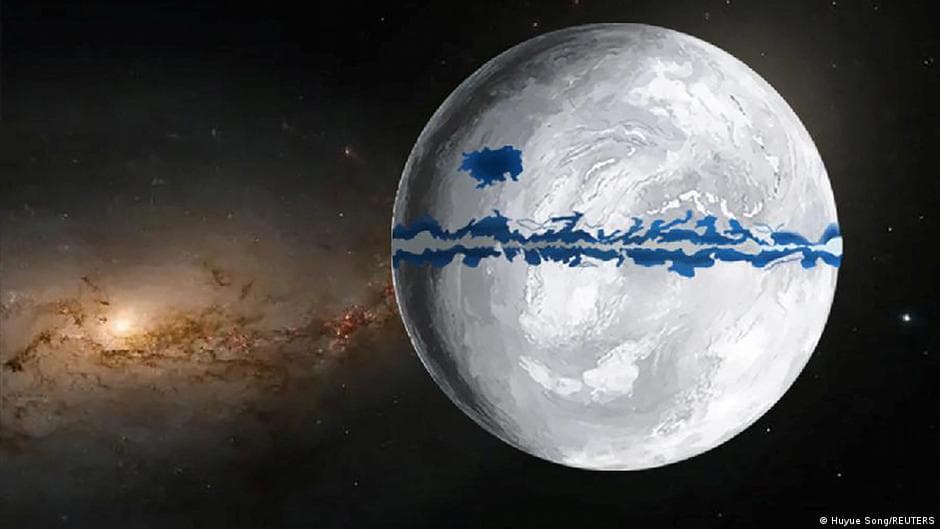
The recent study conducted at Harvard University examines the Cryogenian phenomenon, during which the Earth was entirely frozen for an extended period between 717 and 660 million years ago. This period has been described as the "Sturtian Ice Age." The findings suggest that this state resulted from decreased levels of carbon dioxide caused by weathering processes that fatigued volcanic rocks, leading to planetary cooling and a global ice cover. Throughout this period, natural strategies of oscillation between freezing and thawing occurred, even though the Earth was not constantly frozen; the thawing intervals allowed for the survival of oxygen-dependent microorganisms. The study emphasizes that this phenomenon explains how life on Earth endured during prolonged icy periods, with environments remaining suitable for living organisms despite severe climatic challenges.
Notice: This Is an AI-Generated Summary


Comments (0)