





Jerusalem's Liberation and Third Campaign Starts
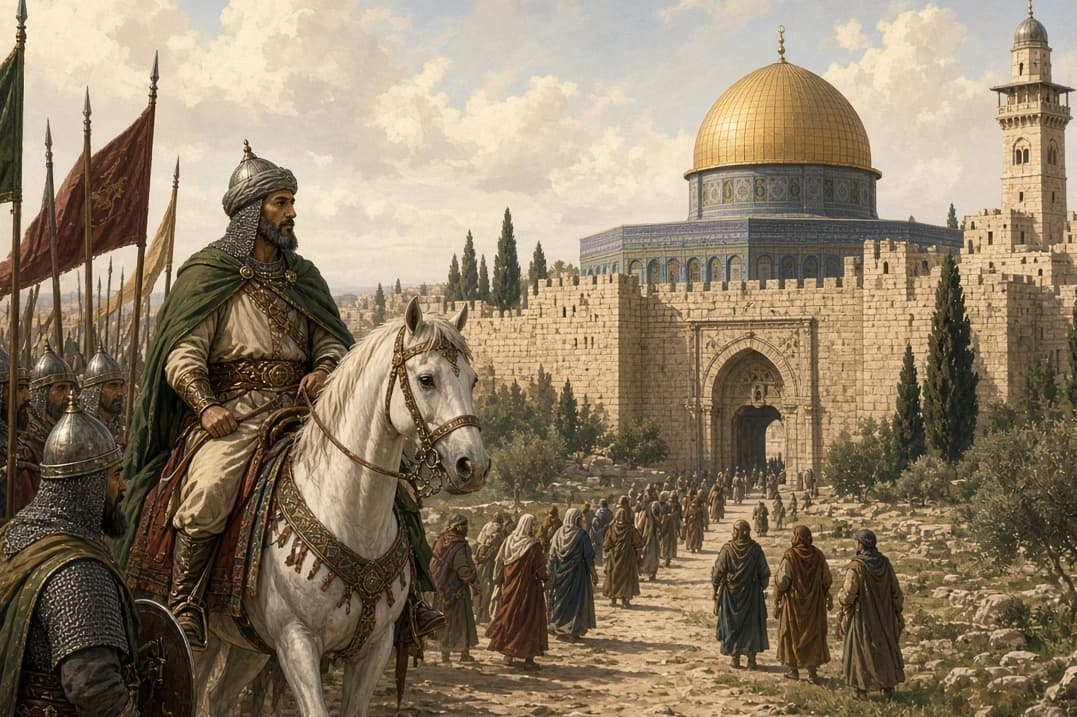
Saladin's reconquest of Jerusalem in 1187 was a pivotal event in the history of the struggle for the Holy City. It ended Crusader control and significantly contributed to the decline of the Crusader Kingdom. After the Battle of Hattin, which resulted in the collapse of the Kingdom of Jerusalem's army and the capture of King Guy de Lusignan, Saladin began the siege of Jerusalem in September 1187. The city suffered from resource shortages due to weak resistance and a small military force. Saladin negotiated with the Crusader garrison and reached a honorable surrender agreement that allowed the Crusaders to withdraw in exchange for paying a ransom and granting freedom of access to the city and the holy sites. The fall of Jerusalem sparked outrage across Europe and led to the launching of the Third Crusade, during which the Crusaders failed to recapture the city despite successes along the coast. This further gradual erosion of the Kingdom of Jerusalem continued until its ultimate fall in 1291. Saladin's reclaiming of Jerusalem remains a decisive event in Islamic and European history, demonstrating that political wisdom and tolerance can be part of military victory, and that control of the holy cities extends beyond mere military strength.
Notice: This Is an AI-Generated Summary
Comments (0)